





Why Location, Parking and Access Now Decide Retail Success
Retail success in 2026 is no longer driven by marquee brands alone; it is increasingly engineered by location intelligence. The post-pandemic consumer has recalibrated expectations — convenience, predictability and time efficiency now shape shopping decisions as much as assortment does. In congested urban markets, access has effectively become currency. Retail assets plugged into expressways, metro corridors and dense residential clusters are outperforming isolated developments, reflecting the rise of micro-catchment economics. Developers are studying traffic flows and neighbourhood income profiles before finalising layouts. The new reality is clear: footfall today is planned, and infrastructure is the first anchor tenant. Why Location, Parking and Access Now Decide Retail Success Location in organised retail has evolved from a prestige-driven pin code play to a data-backed catchment strategy. Developers are no longer chasing address value alone; they are mapping purchasing density within a defined radius. Retail embedded in high-rise residential clusters benefits from a ready, repeat customer base, while high streets and malls are being evaluated on visibility, frontage and movement flow rather than format alone. Transit-oriented developments near metro stations, arterial roads and mixed-use hubs are gaining traction as they convert commuter traffic into consumption. As per Cushman and Wakefield’s Q4 2025 report, Gurugram led the overall retail leasing during Q4-25 with a 63% share, followed by Delhi (22%) and Noida (15%). Malls secured 56% of quarterly leasing volume, while mainstreets accounted for the balance 44% share. Even heritage-heavy markets such as Chandni Chowk are being reinterpreted through structured access and organised retail overlays. Chandni Chowk’s central position in Old Delhi makes it a focal point for both historical exploration and retail activity. Delhi’s extensive metro network directly links to the Chandni Chowk station, which is accessible from any part of the city. Jatin Goel, Executive Director, Omaxe Group, says, “In a market like Chandni Chowk, retail has always been driven by inherited footfall. The demand here is embedded in the ecosystem, and at Omaxe Chowk, we’ve structured that density. Beyond the heritage advantage, we’ve invested in organised access and substantial parking infrastructure, including a multi-level facility that can accommodate over 2,100 vehicles. In a location historically challenged by congestion, that scale of parking changes the experience for both shoppers and traders. When cultural legacy is supported by planned mobility and disciplined vertical retail, location evolves into a sustainable competitive advantage rather than just a celebrated pin code.” Structured, multi-level parking directly influences dwell time, particularly on weekends when family outings dominate footfall. For premium and luxury brands, ease of access is non-negotiable; aspiration collapses if convenience is compromised. Developers are increasingly acknowledging that inadequate parking leads to abandoned carts and truncated experiences. Moreover, access is increasingly functioning as retail’s most powerful marketing lever. Assets located along high-speed corridors such as the Noida–Greater Noida Expressway and the Dwarka Expressway are benefiting from sustained residential absorption and office densification along these belts. Metro expansions are further redrawing retail corridors, creating predictable movement patterns that developers can build around. Signal-free stretches and strong arterial connectivity reduce commute fatigue, while highway-facing visibility acts as passive branding without incremental spend. When office, residential and retail ecosystems converge within a well-connected grid, customer acquisition becomes organic. In this framework, infrastructure does not just enable retail — it materially lowers the cost of attracting and retaining footfall. Yukti Nagpal, Director, Gulshan Group, says, “Retail along potential corridors like the Noida–Greater Noida Expressway is evolving in direct response to the residential and commercial expansion. As new sectors densify and office occupancy strengthens, accessibility and parking become central to performance. Today, customers don’t separate retail from logistics, especially in a market that is largely car-driven. At Gulshan One29, we focused on seamless entry-exit movement and structured parking because weekend footfall here is family-led and time-sensitive. When retail is positioned on a high-growth corridor, supported by organised mobility, dwell time improves naturally. In this micro-market, convenience is what converts passing traffic into predictable consumption.” Ishwin Singh Hora, Director, Reach Group says, “Retail success today is increasingly determined by three critical factors — locatio

Retail success in 2026 is no longer driven by marquee brands alone; it is increasingly engineered by location intelligence. The post-pandemic consumer has recalibrated expectations — convenience, predictability and time efficiency now shape shopping decisions as much as assortment does. In congested urban markets, access has effectively become currency. Retail assets plugged into expressways, metro corridors and dense residential clusters are outperforming isolated developments, reflecting the rise of micro-catchment economics. Developers are studying traffic flows and neighbourhood income profiles before finalising layouts. The new reality is clear: footfall today is planned, and infrastructure is the first anchor tenant.
|
|
Why Location, Parking and Access Now Decide Retail Success
Location in organised retail has evolved from a prestige-driven pin code play to a data-backed catchment strategy. Developers are no longer chasing address value alone; they are mapping purchasing density within a defined radius. Retail embedded in high-rise residential clusters benefits from a ready, repeat customer base, while high streets and malls are being evaluated on visibility, frontage and movement flow rather than format alone. Transit-oriented developments near metro stations, arterial roads and mixed-use hubs are gaining traction as they convert commuter traffic into consumption.
As per Cushman and Wakefield’s Q4 2025 report, Gurugram led the overall retail leasing during Q4-25 with a 63% share, followed by Delhi (22%) and Noida (15%). Malls secured 56% of quarterly leasing volume, while mainstreets accounted for the balance 44% share.
Even heritage-heavy markets such as Chandni Chowk are being reinterpreted through structured access and organised retail overlays. Chandni Chowk’s central position in Old Delhi makes it a focal point for both historical exploration and retail activity. Delhi’s extensive metro network directly links to the Chandni Chowk station, which is accessible from any part of the city.
Jatin Goel, Executive Director, Omaxe Group, says, “In a market like Chandni Chowk, retail has always been driven by inherited footfall. The demand here is embedded in the ecosystem, and at Omaxe Chowk, we’ve structured that density. Beyond the heritage advantage, we’ve invested in organised access and substantial parking infrastructure, including a multi-level facility that can accommodate over 2,100 vehicles. In a location historically challenged by congestion, that scale of parking changes the experience for both shoppers and traders. When cultural legacy is supported by planned mobility and disciplined vertical retail, location evolves into a sustainable competitive advantage rather than just a celebrated pin code.”
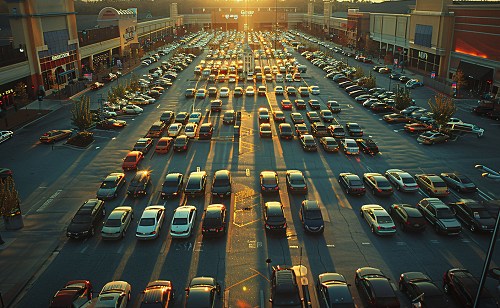
Structured, multi-level parking directly influences dwell time, particularly on weekends when family outings dominate footfall. For premium and luxury brands, ease of access is non-negotiable; aspiration collapses if convenience is compromised. Developers are increasingly acknowledging that inadequate parking leads to abandoned carts and truncated experiences.
Moreover, access is increasingly functioning as retail’s most powerful marketing lever. Assets located along high-speed corridors such as the Noida–Greater Noida Expressway and the Dwarka Expressway are benefiting from sustained residential absorption and office densification along these belts. Metro expansions are further redrawing retail corridors, creating predictable movement patterns that developers can build around. Signal-free stretches and strong arterial connectivity reduce commute fatigue, while highway-facing visibility acts as passive branding without incremental spend. When office, residential and retail ecosystems converge within a well-connected grid, customer acquisition becomes organic. In this framework, infrastructure does not just enable retail — it materially lowers the cost of attracting and retaining footfall.
Yukti Nagpal, Director, Gulshan Group, says, “Retail along potential corridors like the Noida–Greater Noida Expressway is evolving in direct response to the residential and commercial expansion. As new sectors densify and office occupancy strengthens, accessibility and parking become central to performance. Today, customers don’t separate retail from logistics, especially in a market that is largely car-driven. At Gulshan One29, we focused on seamless entry-exit movement and structured parking because weekend footfall here is family-led and time-sensitive. When retail is positioned on a high-growth corridor, supported by organised mobility, dwell time improves naturally. In this micro-market, convenience is what converts passing traffic into predictable consumption.”
Ishwin Singh Hora, Director, Reach Group says, “Retail success today is increasingly determined by three critical factors — location, accessibility and organised parking. While location continues to anchor a retail destination, seamless connectivity, adequate parking and smooth pedestrian movement have become equally important in sustaining footfall. As urban mobility patterns evolve and high-street retail gains traction in markets like Gurugram, developments that prioritise easy access and visitor convenience are seeing stronger retailer demand and more consistent consumer traffic.”
Umang Jindal, CEO, Homeland Group says, “Today, retail success is no longer defined by the size of the mall alone, but by how easily people can access it. Location, seamless connectivity, and adequate parking have become critical factors influencing where consumers choose to shop and spend time. In high-density urban centres, shoppers prefer destinations that reduce friction—whether that means being well connected to key road networks, having direct metro access, or offering convenient parking. Retail spaces that prioritise accessibility and ease of movement are naturally seeing stronger footfall and longer dwell time, which ultimately benefits both retailers and consumers."
Chirag Desai - Centre Head - Felix Plaza says, “In Gurugram, accessibility defines velocity. Retail that sits five minutes off a major corridor performs very differently from retail embedded within it. At Felix Plaza, our strength lies in seamless approach roads and adjacency to high-density residential sectors. Customers today calculate time subconsciously. If they can exit the expressway, park smoothly, and access curated brands without navigating internal chaos, repeat visits follow naturally. Accessibility isn’t an operational detail; it is the foundation of sustainable leasing performance.”
Therefore, the new retail formula is increasingly structural rather than symbolic. Success today rests on four interlinked pillars: location intelligence, structured parking, seamless access and a curated tenant mix. Developers are recognising that even the strongest brand roster cannot compensate for poor approach roads or inadequate parking. Ultimately, retail performance is no longer just about who you lease to; it is about how intelligently the asset is positioned within its movement ecosystem.