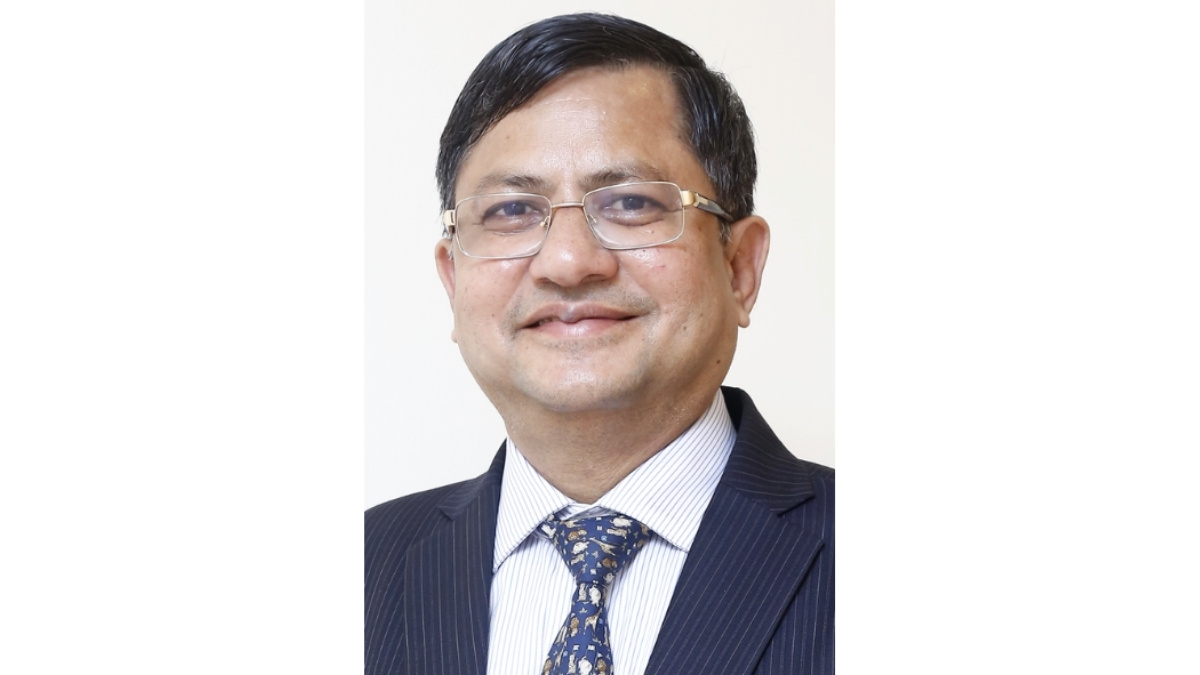



Shri Shiv Pratap Shukla – Hon Governor of Telangana Inaugurates Rumale Chennabasaviah’s Retrospective at Salar Jung Museum Hyderabad
New Delhi [India], April 21: The landmark retrospective ‘Varna Mythri’, celebrating the life and work of master artist Rumale Chennabasaviah (1910-1988), was inaugurated by Shri Shiv Pratap Shukla, the Hon’ble Governor of Telangana, at the Salar Jung Museum, Hyderabad, as part of the institution’s ongoing Platinum Jubilee celebrations marking 75 years. As a key highlight [...]

New Delhi [India], April 21: The landmark retrospective ‘Varna Mythri’, celebrating the life and work of master artist Rumale Chennabasaviah (1910-1988), was inaugurated by Shri Shiv Pratap Shukla, the Hon’ble Governor of Telangana, at the Salar Jung Museum, Hyderabad, as part of the institution’s ongoing Platinum Jubilee celebrations marking 75 years. As a key highlight of this milestone year, the exhibition brings to Hyderabad, for the first time, a significant body of Rumale’s work, offering a rare and immersive look into his deeply reflective and nature-rooted practice.

Addressing the gathering, the Governor spoke about the enduring power of art to communicate beyond words, noting, “Art has a remarkable power that touches the heart. Artists communicate with their audiences through their works without words.” Reflecting on Rumale’s legacy, he added, “Looking at his paintings today, it becomes clear how deep and intimate his connection with nature was. The skill with which he depicts Bengaluru’s green gardens and colourful flowers reflects his love for nature. I was also deeply impressed by his disciplined and dedicated work ethic. It’s well known that the life of an artist is not easy, but creating so many masterpieces in a single lifetime is a testament to his unwavering faith and passion. He was also associated with the freedom struggle and joined the ranks of great artists who challenged the British through their creative works.

There is something profoundly moving about Rumale’s journey. Born in Doddaballapura, near Bengaluru, and shaped by the Indian freedom movement, which he not only participated in but actively helped shape, enduring multiple incarcerations, he went on to live many lives: a nation builder, a politician, an editor, a spiritual seeker, and a cultural and social activist, before eventually returning to art as a self-taught painter at the age of 52. In the decades that followed, he created a body of work that is both personal and timeless. His canvases do not demand attention… they draw you in quietly, asking you to pause, to look again, and to rediscover the beauty of the everyday. Rooted in a deep love for nature and guided by a spiritual sensibility, his works carry the same quiet intensity he brought to life itself. Painting en plein air, he found his studio in the open – on the streets, in the gardens, and amid the changing light of the day, carefully observing and returning to the same spot to capture flowering trees, parks, rivers, and cityscapes in their fullest expression. Over a lifetime, he created nearly numerous works, some commissioned to document Karnataka’s modernisation, yet it is his intimate, luminous portrayals of nature, Bengaluru’s blossoms in particular, that continue to linger long after one has stepped away.
Rumale’s current retrospective at the Salar Jung Museum in Hyderabad gathers around 80 of his major works – watercolors and oils from the 1960s to the 1980s. This selection of watercolors and oil paintings has been drawn from the Rumale Art House in Bengaluru, which, interestingly, also completes 53 years of its establishment. Together, they trace not just the evolution of an artist, but the quiet flowering of a way of seeing. Visitors will encounter Bengaluru as Rumale knew it: its Gulmohars and Jacarandas in full bloom, its gardens breathing in colour, its streets and silences alive with observation. Alongside these are landscapes from Karnataka and Sri Lanka, spiritual sites such as Kudalasangama, and rare portraits, including those of the spiritual gurus who shaped his inner life and guided his craft – Shreeman Tapaswiji Maharaj and Sri Sri Sri Shivabalayogi Maharaj.
Archival photographs, personal memorabilia, sketches, and audio-visual material further bring the artist’s life into view, offering visitors a rare chance to encounter not just the works, but the world that shaped them.
Rumale’s work resists easy categorisation. At a time when artists were often divided between the traditional and the modern, he chose his own path – one that was intuitive, inclusive, and rooted in observation. He painted what he saw, but also what he felt. In doing so, he created not just images, but a philosophy: that art and nature are inseparable from everyday life.
Speaking about the exhibition, IAS Priyanka Mary Francis, and also the Director of the Salar Jung Museum, shared, “We are delighted to present Rumale Chennabasaviah’s works in Hyderabad for the very first time. A freedom fighter, spiritual seeker, and cultural voice, his art speaks across generations. More than any other artist of his generation, Rumale sought and acquired a distinct visual vocabulary. He shaped a unique pictorial mode for himself, evident in several of his paintings on display in this Retrospective. I thank Shri Srinivasa Murthy for curating this exhibition and to the Rumale Art House for collaborating with us and lending these precious works of art, which will be seen for the first time in Hyderabad.”
Curated by noted artist and critic K. S. Srinivasa Murthy, the retrospective invites viewers to return to the works more than once. As he reflected, “Rumale’s paintings reveal themselves slowly. What may seem simple at first begins to unfold with each viewing, offering new insights into a deeply personal yet universal way of seeing. His art moves beyond style or skill; it connects with people, quietly and profoundly.”
A special highlight of the exhibition is the soft release of ‘Rumale: The Artist in His Words’, an English translation of the artist’s autobiographical writings, richly illustrated with rare archival material. It offers, for the first time, an opportunity to hear the artist speak in his own voice… about art, nature, and the life he chose to lead.
The exhibition will remain on view at the Salar Jung Museum until 25th May 2026. Daily 10 am to 6 pm (Fridays closed). Entry with a museum ticket.
If you object to the content of this press release, please notify us at pr.error.rectification@gmail.com. We will respond and rectify the situation within 24 hours.