




.jpg)



Karnataka Targets 66 GW Power Capacity by 2030: Energy Department Additional Chief Secretary Gaurav Gupta
Karnataka has unveiled a 10-year roadmap to scale its installed power capacity from over 39 GW currently to 66 GW by 2030, with the future expansion set to remain overwhelmingly focused on clean energy, Additional Chief Secretary, Energy Department, Government of Karnataka, Shri Gaurav Gupta, said at the Bharat Electricity Indian Utility Week 2026 summit. Shri Gaurav Gupta, ACS (Energy) along with Smt. Divya Prabhu GRJ, MD, KREDL inaugurates the Karnataka Pavilion at Bharat Electricity Summit 2026 Addressing the Focus State Session for Karnataka during Bharat Electricity and Indian Utility Week 2026 at Yashobhoomi, New Delhi, Shri Gupta said the State was preparing its power sector to meet rapidly rising electricity demand while strengthening grid infrastructure, energy storage and renewable energy capacity - an effort that will contribute directly to India's national clean energy targets. Shri Gaurav Gupta, ACS (Energy) along with Smt. Divya Prabhu GRJ, MD, KREDL and other dignitaries at the Bharat Electricity Summit 2026, New Delhi Karnataka currently has more than 39 GW of installed power capacity, with two-thirds of its power mix coming from clean hydro and renewable sources. The State has been able to meet a significant share of its daily electricity demand through green power. “Over the next decade, Karnataka will continue to expand its power capacity while ensuring that this growth remains overwhelmingly green,” Gaurav Gupta said. The State’s electricity demand is expected to double over the coming decade, driven by rapid industrial expansion, widespread electric vehicle adoption and the development of large data centres in Bengaluru, Mysuru and Mangaluru. To manage this growth, Karnataka has emerged as an early State to implement a CEA and KERC-approved Resource Adequacy Plan. Gaurav Gupta said the State’s clean-energy transition would be backed by investments in grid resilience and energy storage. Karnataka is advancing the 2,000 MW Sharavathy Pumped Storage Project and deploying large-scale Battery Energy Storage Systems at critical KPTCL substations to provide greater flexibility to the power grid. The State is also expanding the Pavagada Solar Park, scaling up wind capacity and promoting the solarisation of agricultural feeders through PM-KUSUM Component-C and the Chief Minister Saura Krishi Yojana (CM-SKY). On transmission infrastructure, Gaurav Gupta said KPTCL was operating with ultra-low transmission losses of under 3 per cent and was undertaking the construction of thousands of kilometres of new transmission lines and super-grid substations. Gaurav Gupta highlighted Karnataka’s long-standing leadership in India’s energy sector, noting that the State established Asia’s first major hydroelectric power station at Shivanasamudram in 1902, while Bengaluru became the first city in South Asia to be electrified in 1905. Karnataka is ensuring there is no curtailment of transmission and no delay in payments to power generators, providing greater certainty to investors, Gaurav Gupta said. He said the State is encouraging greater private participation in energy storage and transmission and expects to attract Rs. 2–3 crore in private investment in the power sector over the next four to five years. Gaurav Gupta said Karnataka was also responding to feedback from investors, including on land-related regulations and project procedures. As part of this exercise, the State is simplifying rules and processes and moving them online to provide investors with a clear and seamless pathway for setting up projects. “This kind of transparent and streamlined system will make it easier for more investors to participate in Karnataka’s power sector,” he added. As India moves towards the goal of Viksit Bharat by 2047, Karnataka is positioning itself to lead in the next phase of the country’s clean-energy transition, with opportunities for global partnerships in battery storage, green hydrogen and smart-grid automation, Karnataka Renewable Energy Development Ltd Managing Director Divya Prabhu said. Digitalisation will be key to the future growth of renewable energy, Divya Prabhu said. She said the electricity system and power generation are moving towards a more predictable and efficient architecture, supported by better forecasting and prediction systems. These advances are being made possible through digitally intelligent power systems. She highlighted the growing role of Artificial Intelligence (AI) in the energy sector, including optimising power procurement, using digital twins to simulate and assess power networks, and enabling predictive maintenance and management of assets. Divya Prabhu

Karnataka has unveiled a 10-year roadmap to scale its installed power capacity from over 39 GW currently to 66 GW by 2030, with the future expansion set to remain overwhelmingly focused on clean energy, Additional Chief Secretary, Energy Department, Government of Karnataka, Shri Gaurav Gupta, said at the Bharat Electricity Indian Utility Week 2026 summit.
|
|
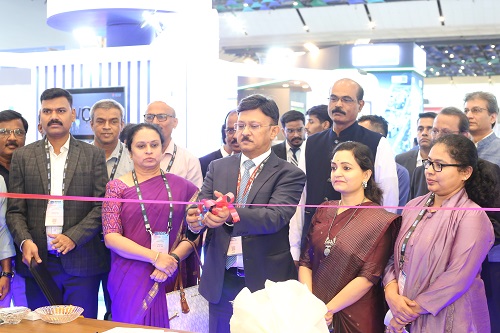
Shri Gaurav Gupta, ACS (Energy) along with Smt. Divya Prabhu GRJ, MD, KREDL inaugurates the Karnataka Pavilion at Bharat Electricity Summit 2026
Addressing the Focus State Session for Karnataka during Bharat Electricity and Indian Utility Week 2026 at Yashobhoomi, New Delhi, Shri Gupta said the State was preparing its power sector to meet rapidly rising electricity demand while strengthening grid infrastructure, energy storage and renewable energy capacity - an effort that will contribute directly to India's national clean energy targets.
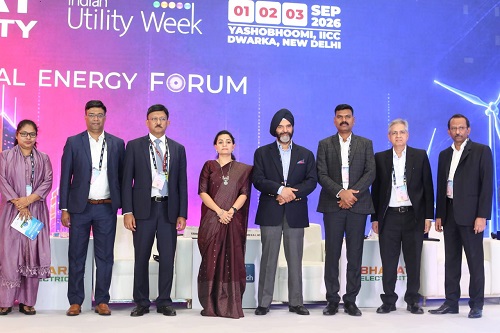 |
Shri Gaurav Gupta, ACS (Energy) along with Smt. Divya Prabhu GRJ, MD, KREDL and other dignitaries at the Bharat Electricity Summit 2026, New Delhi
Karnataka currently has more than 39 GW of installed power capacity, with two-thirds of its power mix coming from clean hydro and renewable sources. The State has been able to meet a significant share of its daily electricity demand through green power.
“Over the next decade, Karnataka will continue to expand its power capacity while ensuring that this growth remains overwhelmingly green,” Gaurav Gupta said.
The State’s electricity demand is expected to double over the coming decade, driven by rapid industrial expansion, widespread electric vehicle adoption and the development of large data centres in Bengaluru, Mysuru and Mangaluru. To manage this growth, Karnataka has emerged as an early State to implement a CEA and KERC-approved Resource Adequacy Plan.
Gaurav Gupta said the State’s clean-energy transition would be backed by investments in grid resilience and energy storage. Karnataka is advancing the 2,000 MW Sharavathy Pumped Storage Project and deploying large-scale Battery Energy Storage Systems at critical KPTCL substations to provide greater flexibility to the power grid.
The State is also expanding the Pavagada Solar Park, scaling up wind capacity and promoting the solarisation of agricultural feeders through PM-KUSUM Component-C and the Chief Minister Saura Krishi Yojana (CM-SKY).
On transmission infrastructure, Gaurav Gupta said KPTCL was operating with ultra-low transmission losses of under 3 per cent and was undertaking the construction of thousands of kilometres of new transmission lines and super-grid substations.
Gaurav Gupta highlighted Karnataka’s long-standing leadership in India’s energy sector, noting that the State established Asia’s first major hydroelectric power station at Shivanasamudram in 1902, while Bengaluru became the first city in South Asia to be electrified in 1905.
Karnataka is ensuring there is no curtailment of transmission and no delay in payments to power generators, providing greater certainty to investors, Gaurav Gupta said.
He said the State is encouraging greater private participation in energy storage and transmission and expects to attract Rs. 2–3 crore in private investment in the power sector over the next four to five years.
Gaurav Gupta said Karnataka was also responding to feedback from investors, including on land-related regulations and project procedures. As part of this exercise, the State is simplifying rules and processes and moving them online to provide investors with a clear and seamless pathway for setting up projects.
“This kind of transparent and streamlined system will make it easier for more investors to participate in Karnataka’s power sector,” he added.
As India moves towards the goal of Viksit Bharat by 2047, Karnataka is positioning itself to lead in the next phase of the country’s clean-energy transition, with opportunities for global partnerships in battery storage, green hydrogen and smart-grid automation, Karnataka Renewable Energy Development Ltd Managing Director Divya Prabhu said.
Digitalisation will be key to the future growth of renewable energy, Divya Prabhu said.
She said the electricity system and power generation are moving towards a more predictable and efficient architecture, supported by better forecasting and prediction systems. These advances are being made possible through digitally intelligent power systems.
She highlighted the growing role of Artificial Intelligence (AI) in the energy sector, including optimising power procurement, using digital twins to simulate and assess power networks, and enabling predictive maintenance and management of assets.
Divya Prabhu also said the digitalisation of renewable energy projects is a major milestone for Karnataka. The State has mapped renewable energy projects and developed a single-window digital platform that provides investors with comprehensive information on projects, making it easier for them to explore and invest in the sector.
“Karnataka is working towards creating a digitally enabled renewable energy ecosystem that is more transparent, predictable and investor-friendly,” she said.
Bharat Electricity Indian Utility Week 2026 is Organised by The Energy & Climate Initiatives Society (ENCIS), the three-day event convenes more than 15,000 professionals, over 250 exhibitors, and 150 global thought leaders from 40 countries. Major sponsors and participating organisations include Adani, NTPC, Coal India, NLC, Tata Power, ReNew, EDF, Schneider Electric, Toshiba JSW, Kirloskar Brothers, and others. Delegations from the US, UK, Germany, France, Japan, South Korea, Australia, UAE, Singapore and more have gathered in New Delhi to advance India’s clean energy and technology ambitions.
Guided by the theme 'Shaping Energy Sovereignty • Building Climate Resilience • Powering Viksit Bharat,' Bharat Electricity, POWERGEN India & Indian Utility Week 2026 is more than a showcase, it is a catalyst for next-generation energy solutions, manufacturing, and global collaboration.


