





Japan’s 70 Years of Graduate Hiring Offer Lessons for India’s Agentic AI Era
India’s enterprises must decide where AI agents can coordinate at scale—and where human judgment must remain in control, says Cognavi New Delhi [India], September 17: As Indian enterprises move rapidly from experimenting with generative AI to deploying AI agents in real business processes, the bigger challenge is no longer simply how much work can be [...]

India’s enterprises must decide where AI agents can coordinate at scale—and where human judgment must remain in control, says Cognavi
New Delhi [India], September 17: As Indian enterprises move rapidly from experimenting with generative AI to deploying AI agents in real business processes, the bigger challenge is no longer simply how much work can be automated. It is deciding which decisions can safely be handed over to machines and which must continue to rest with people.
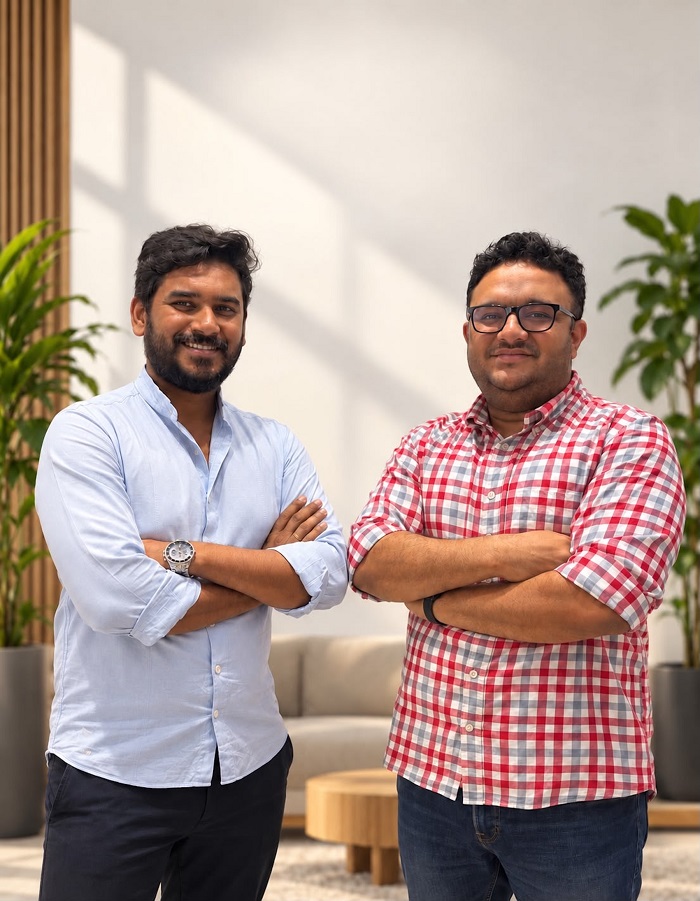
Drawing on his experience of growing up in Japan, spending more than 15 years working across the Japan-India corridor and now leading an AI recruitment platform in India backed by a listed Japanese parent, the leadership at Cognavi believes Japan’s long-standing graduate hiring system offers an important lesson for Indian businesses entering the agentic AI era.
Japan’s shinsotsu ikkatsu saiyo, or simultaneous mass hiring of fresh graduates, has processed millions of candidates every year since the post-war period. The system industrialised almost every part of the hiring process—from standardised applications and company briefings to tightly coordinated schedules and large-scale candidate processing.
Yet one crucial part was never fully proceduralised: the interview, or mensetsu. Despite the highly structured nature of the overall system, the final decision on a candidate has traditionally remained with human interviewers, often through several rounds.
The distinction is particularly relevant today as enterprises begin deploying AI agents across recruitment and other high-volume business functions.
“Coordination scales; judgment doesn’t.”
That distinction sits at the heart of Cognavi’s approach to agentic hiring.
AI agents can efficiently handle high-volume, low-ambiguity activities such as parsing thousands of applications, matching candidates against role requirements, coordinating schedules and moving candidates through different stages of the recruitment pipeline. Such automation can significantly reduce repetitive work and free recruiters to focus on areas where human judgment is essential.
The final decision, however, remains a human responsibility.
Determining whether a candidate genuinely fits a role, whether potential outweighs a lack of experience, or whether qualities such as resilience and learning agility are genuinely present involves judgment that cannot simply be delegated to an unsupervised system.
Cognavi has built this distinction into its product philosophy. Candidates on the platform are “matched” rather than “assessed” by the system. Matching refers to aligning demonstrated skills with the requirements of a role, while assessment implies a definitive judgment about a person.
The company also takes a deliberately conservative approach to capability claims, committing to present only features that have actually been developed and demonstrated in production.
The fresher paradox
The issue becomes even more significant in graduate recruitment.
Fresh graduates typically have little or no work history, leaving recruiters with limited information in a conventional résumé. This makes technology-driven processes such as structured assessments, behavioural signals and skill-based matching particularly valuable.
At the same time, the absence of a long employment record makes the final hiring judgment more difficult.
When an experienced hire turns out to be unsuitable, there is often a track record that can help explain the decision. With a fresher, there may be no comparable baseline. A poor hiring decision can therefore remain hidden for years, while its consequences accumulate within an organisation.
This creates what Cognavi describes as the “fresher paradox”: enterprises should automate evaluation inputs more aggressively in graduate hiring, while protecting the final hiring judgment even more carefully.
The challenge, therefore, is not simply deciding whether to automate more or less. It is deciding what to automate.
Automation is not a dial
For enterprise leaders, automation should not be viewed simply as a dial where turning it higher automatically represents progress. It is ultimately a question of accountability—defining where a machine can act independently and where a clearly identified human must remain responsible for the outcome.
Japan’s graduate hiring model offers a useful historical example: industrialise and coordinate everything surrounding the decision, but do not industrialise the decision itself.
As India moves deeper into the agentic AI era, that principle is becoming increasingly relevant.
The enterprises that lead the next phase of talent acquisition may not necessarily be those that automate the most. They are likely to be those that make deliberate decisions about where AI can be trusted to coordinate at scale—and where human judgment must remain firmly in charge.
About Cognavi
Cognavi is an AI recruitment platform focused on enabling enterprises to manage high-volume hiring through skill-based matching and intelligent recruitment workflows, while maintaining human oversight over consequential hiring
If you object to the content of this press release, please notify us at pr.error.rectification@gmail.com. We will respond and rectify the situation within 24 hours.